35mm Film Wedding Photographer
Analogue wedding photography on a Leica M6 and other old cameras, at every wedding
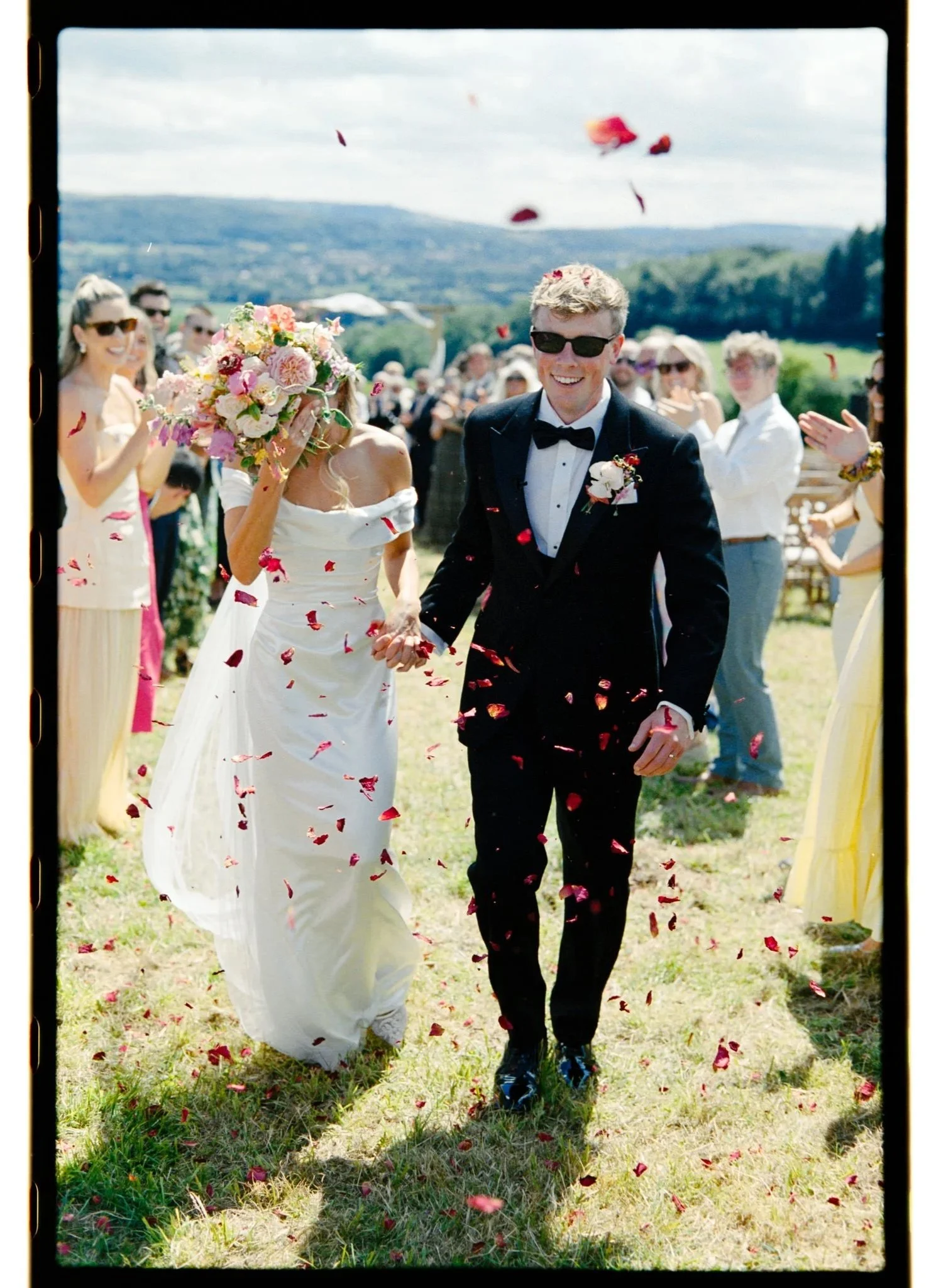
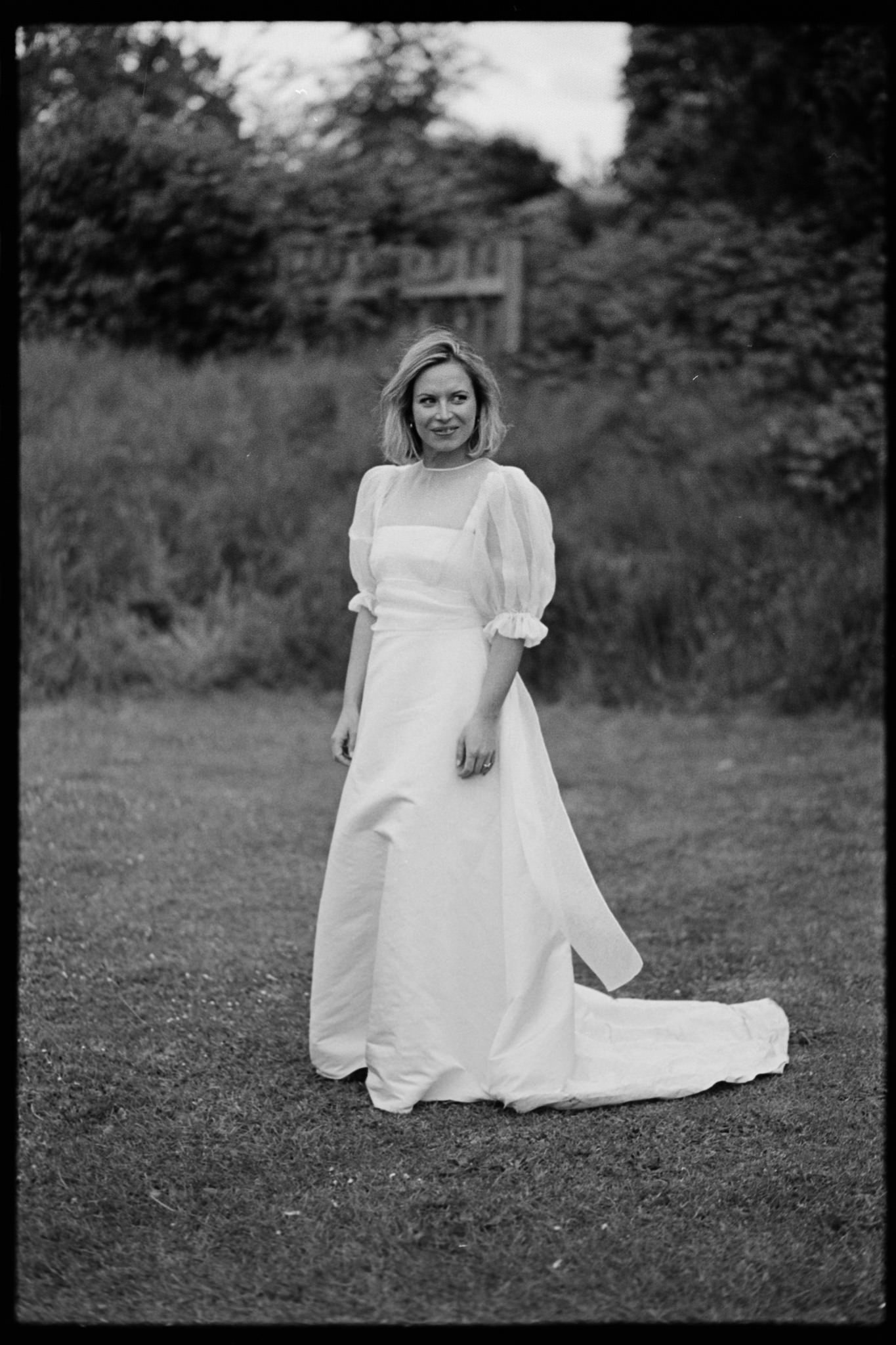
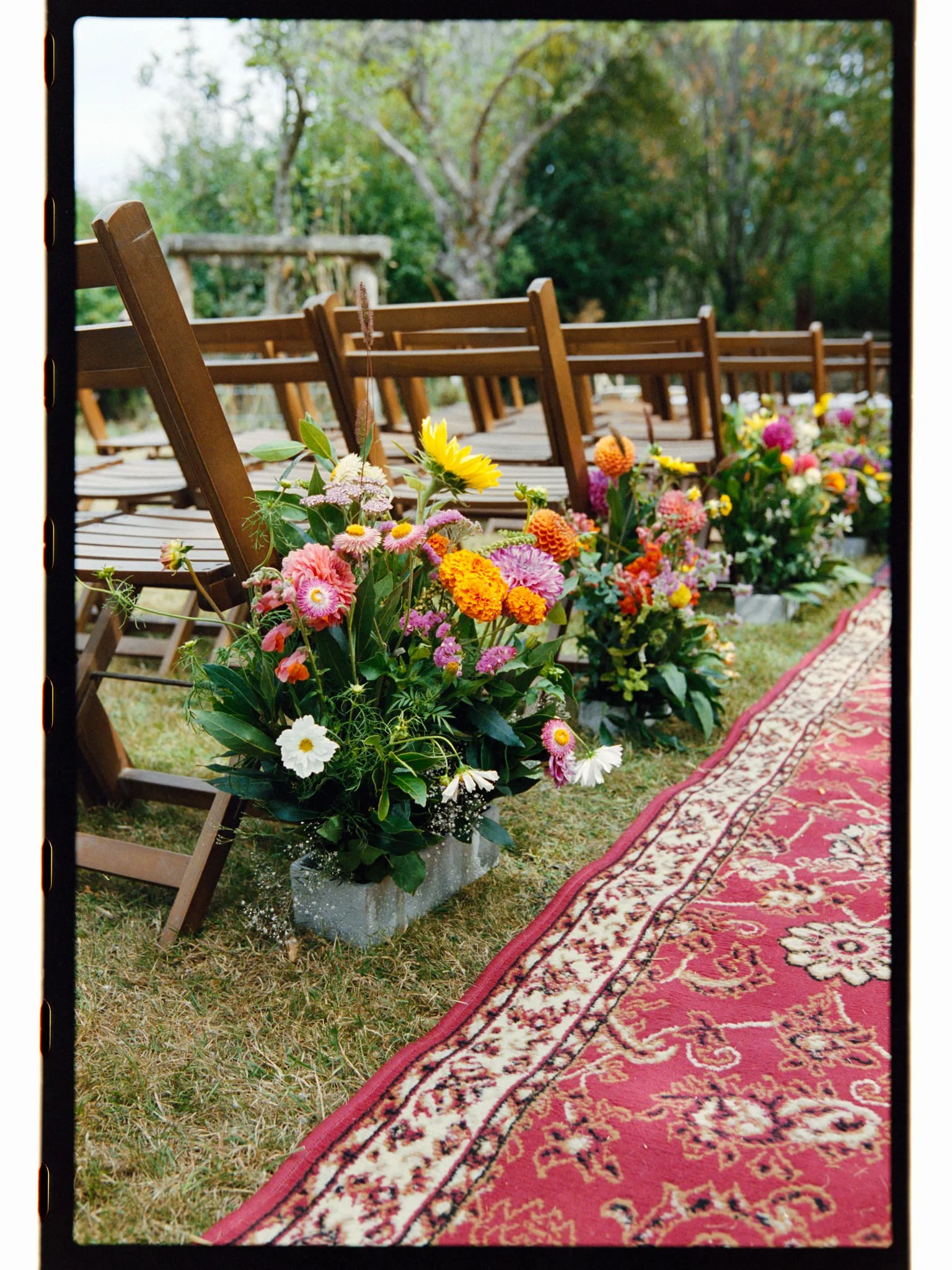
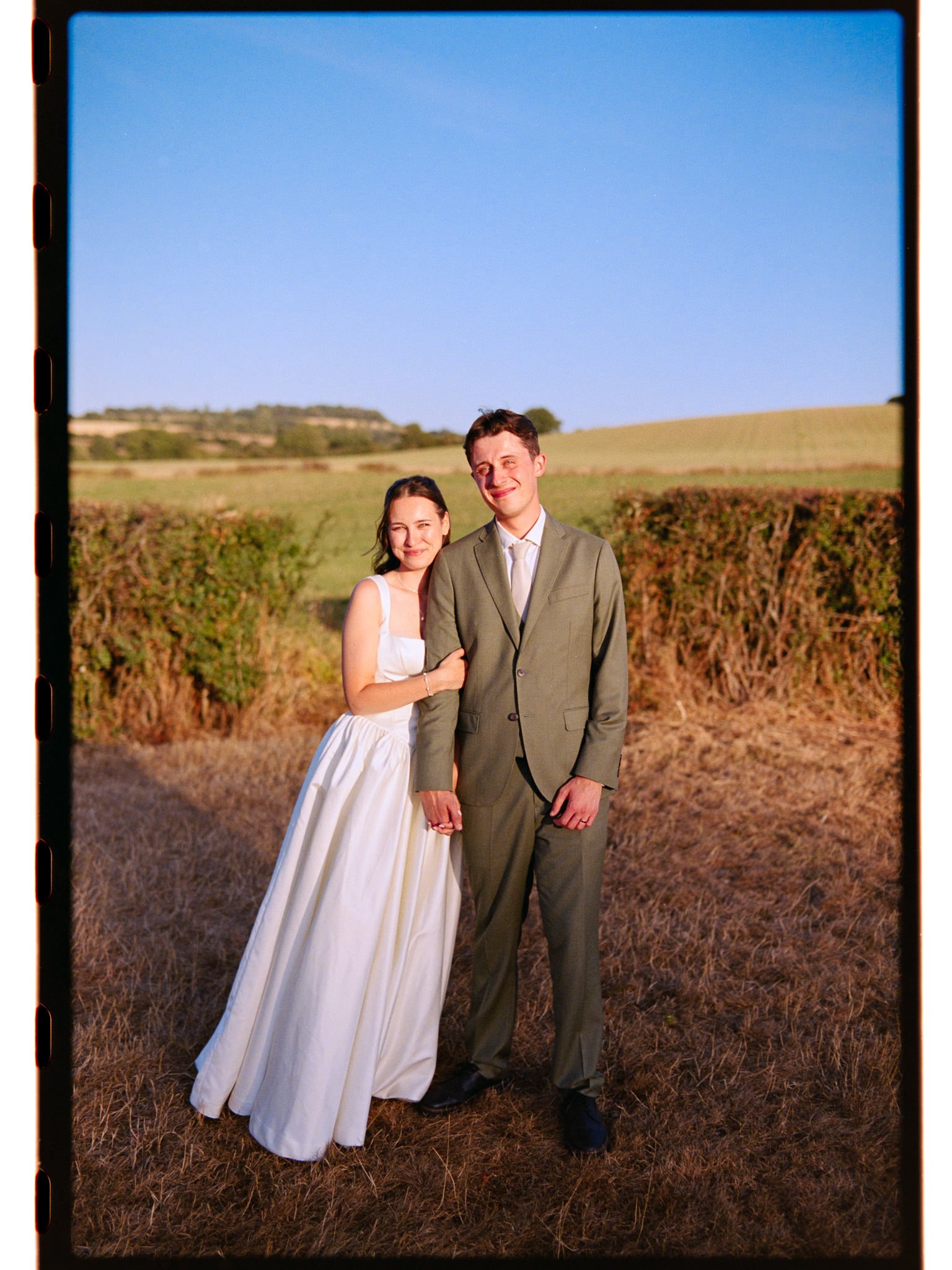
Private location near Bristol - Kodak Portra 400
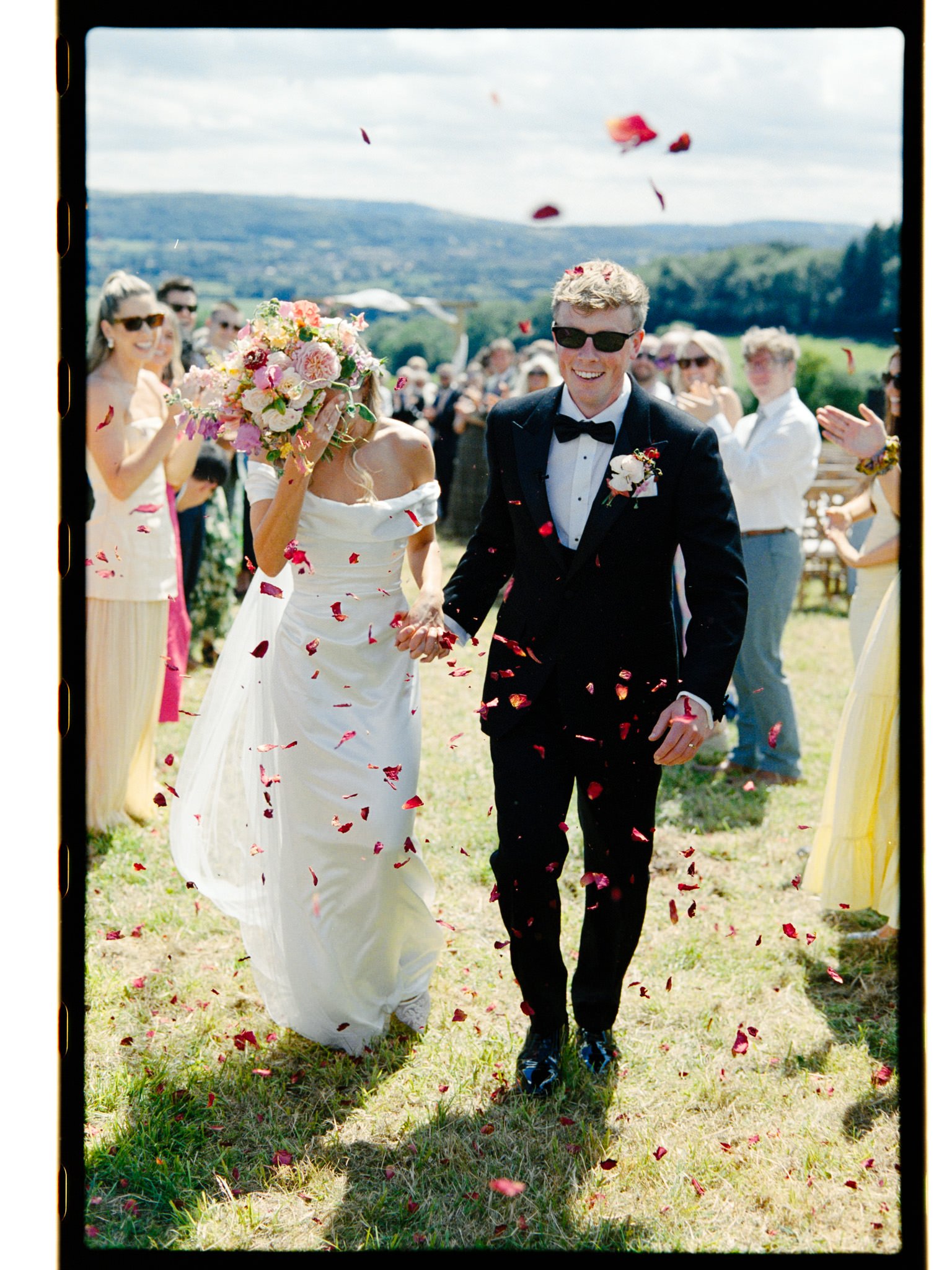
I'm a Bristol-based documentary wedding photographer and I shoot 35mm analogue film on a Leica M6 and many other retro cameras at every wedding. Film is included in every booking at no extra cost, and I've been shooting it since 1996, which is long before it was fashionable and some time after it was sensible.
Why I Shoot Weddings on Film
I spent years trying to make my digital photographs look like film. Then my first child came along, and I wanted photographs that were permanent: printed, held, kept in a box not a cloud server. So I grabbed an old film camera.
It had a rather profound effect on me. If film was right for the photographs I cared about most, it was right for weddings too. So I stopped chasing the analogue look and went back to the real thing. Every frame is a small chemical reaction between light and film, fixed on a strip of negative. That light, that moment, those people. Not ones and zeros in a data centre.
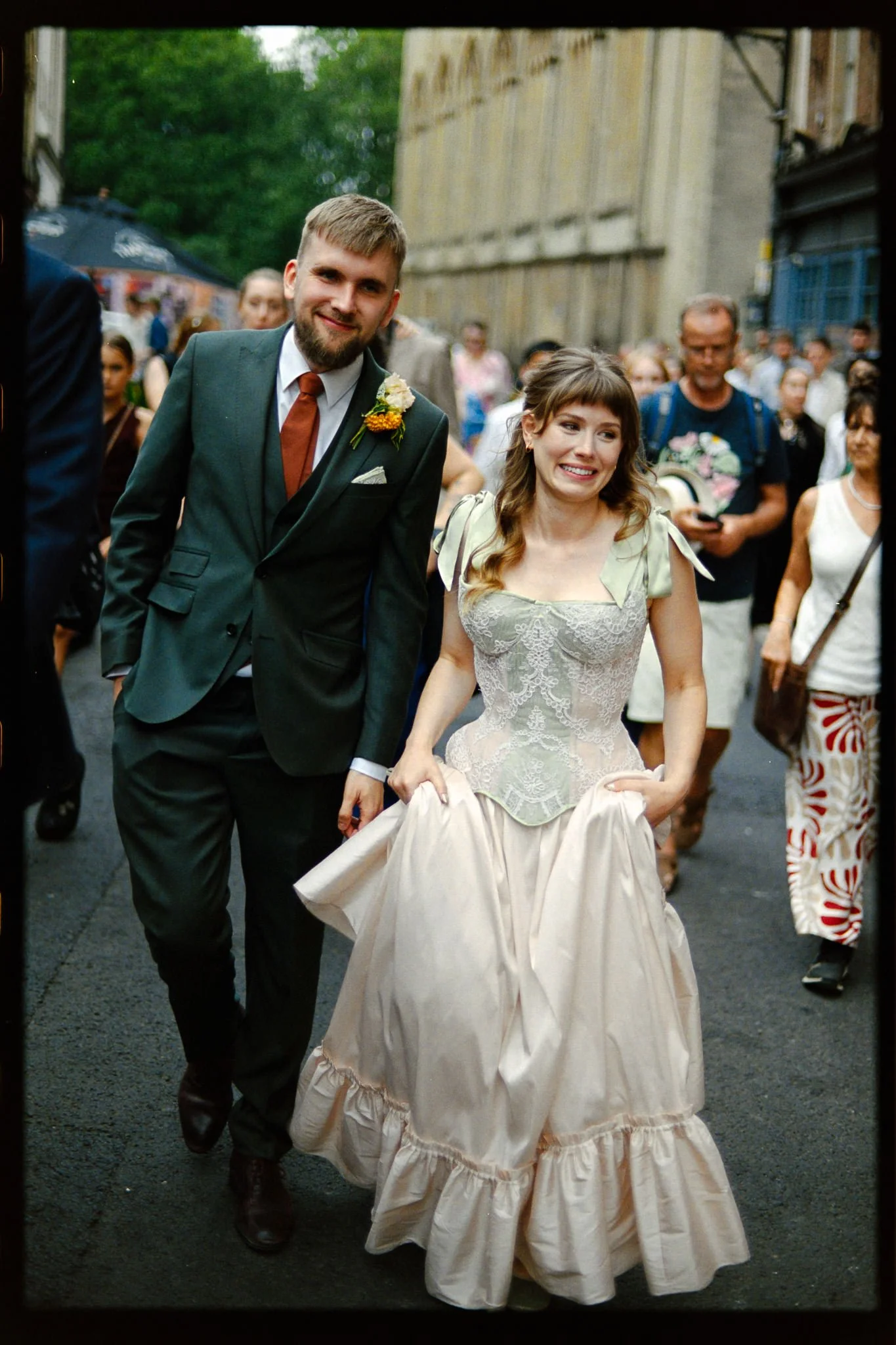
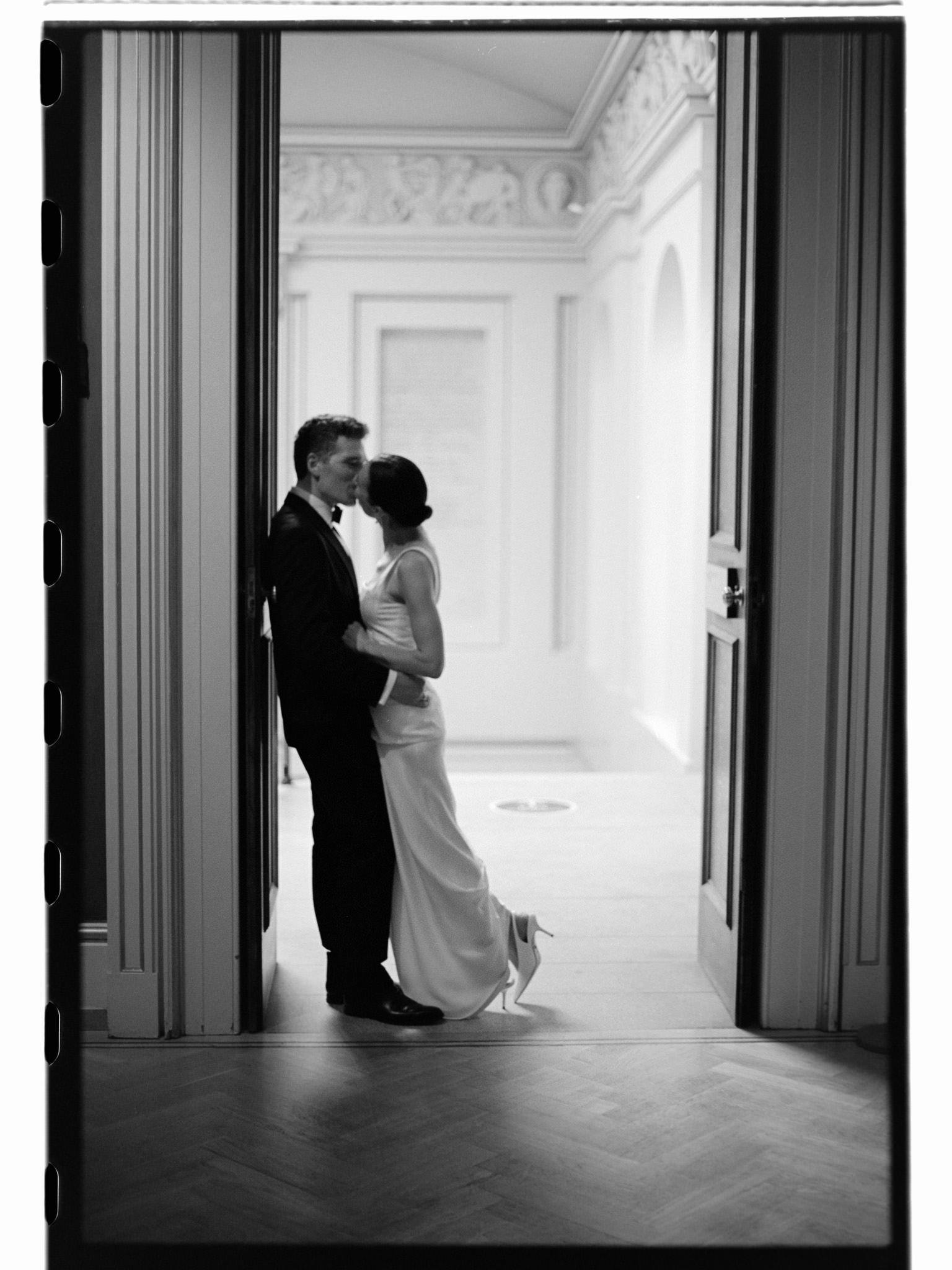
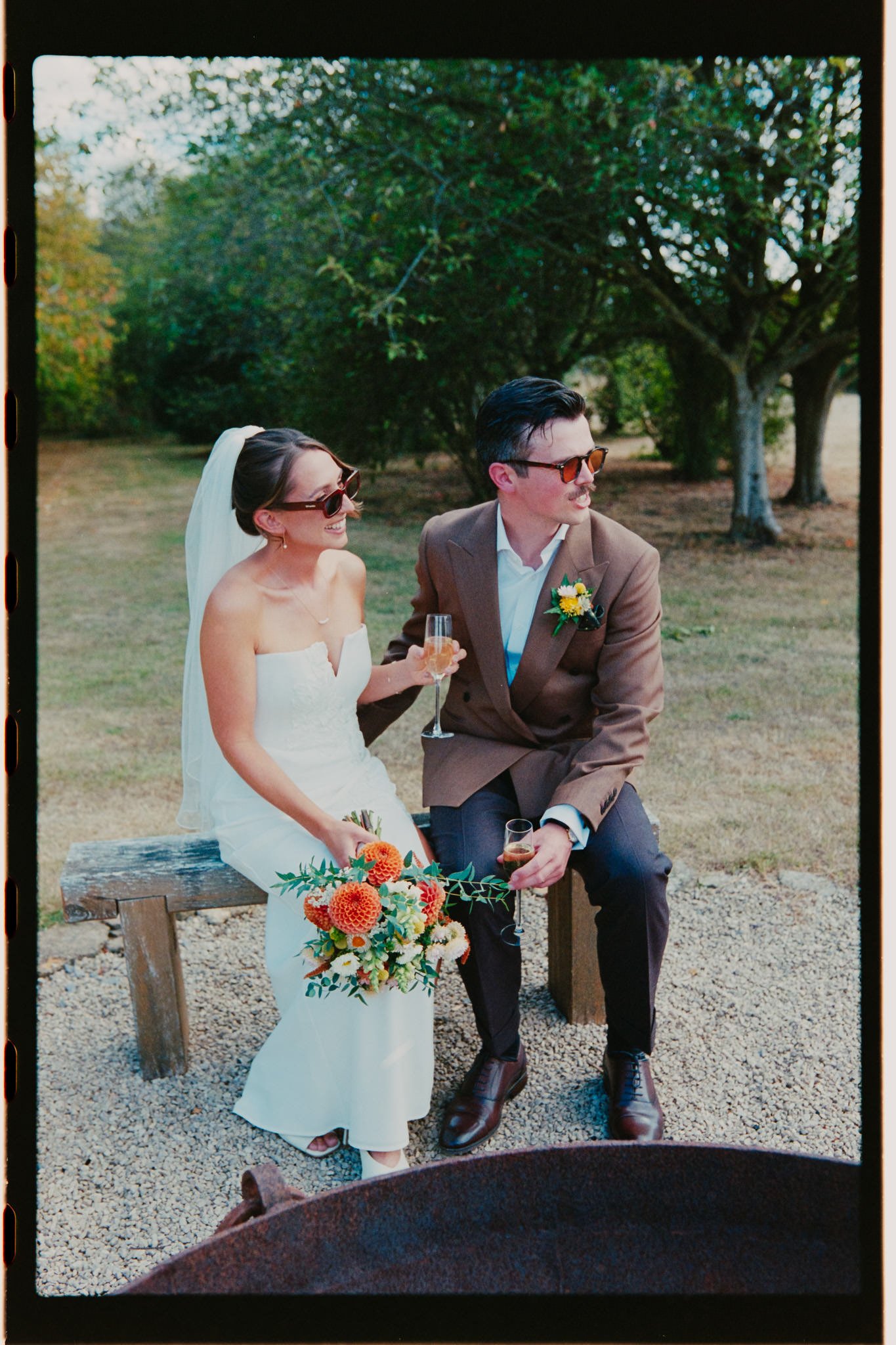
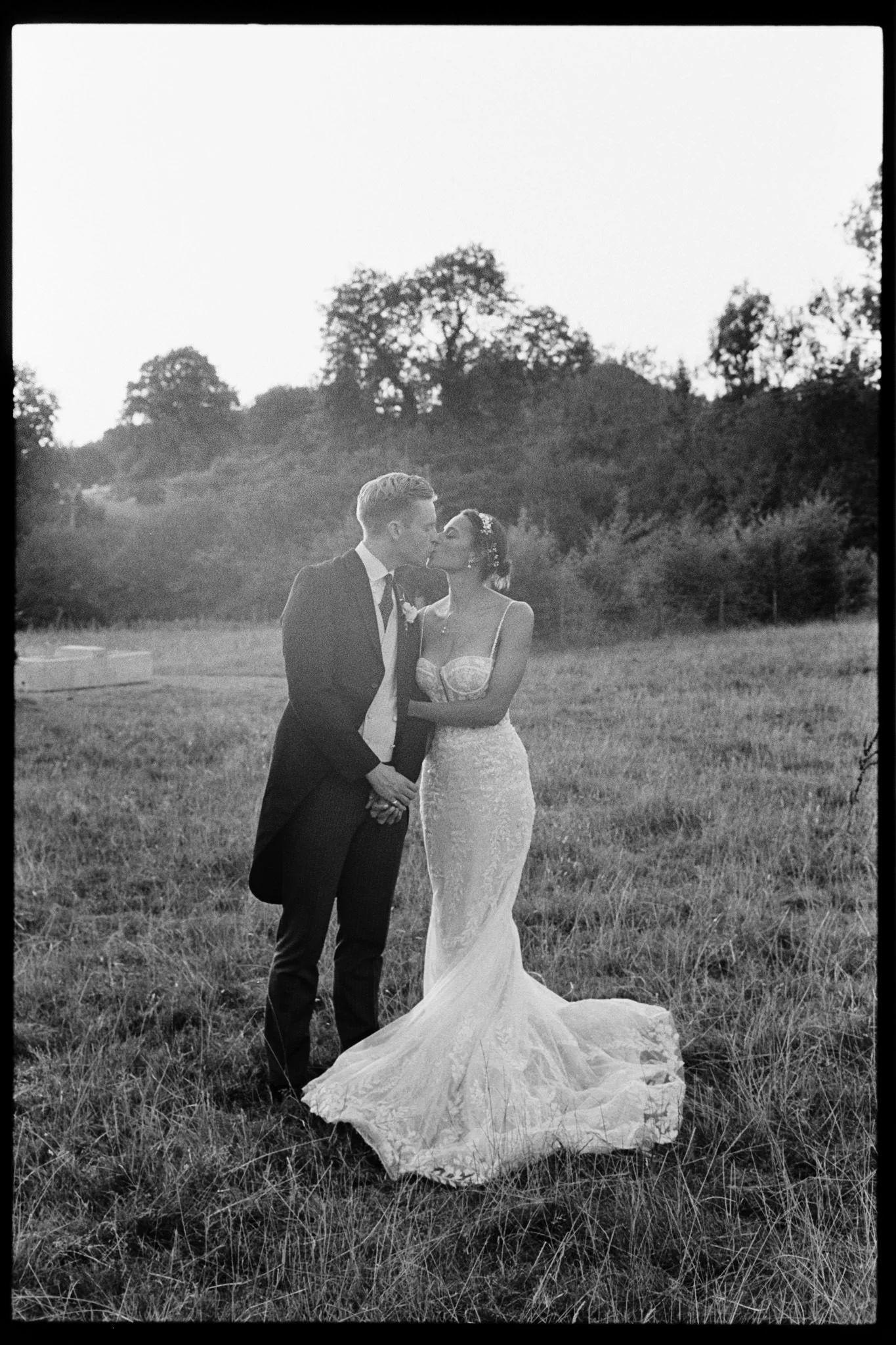
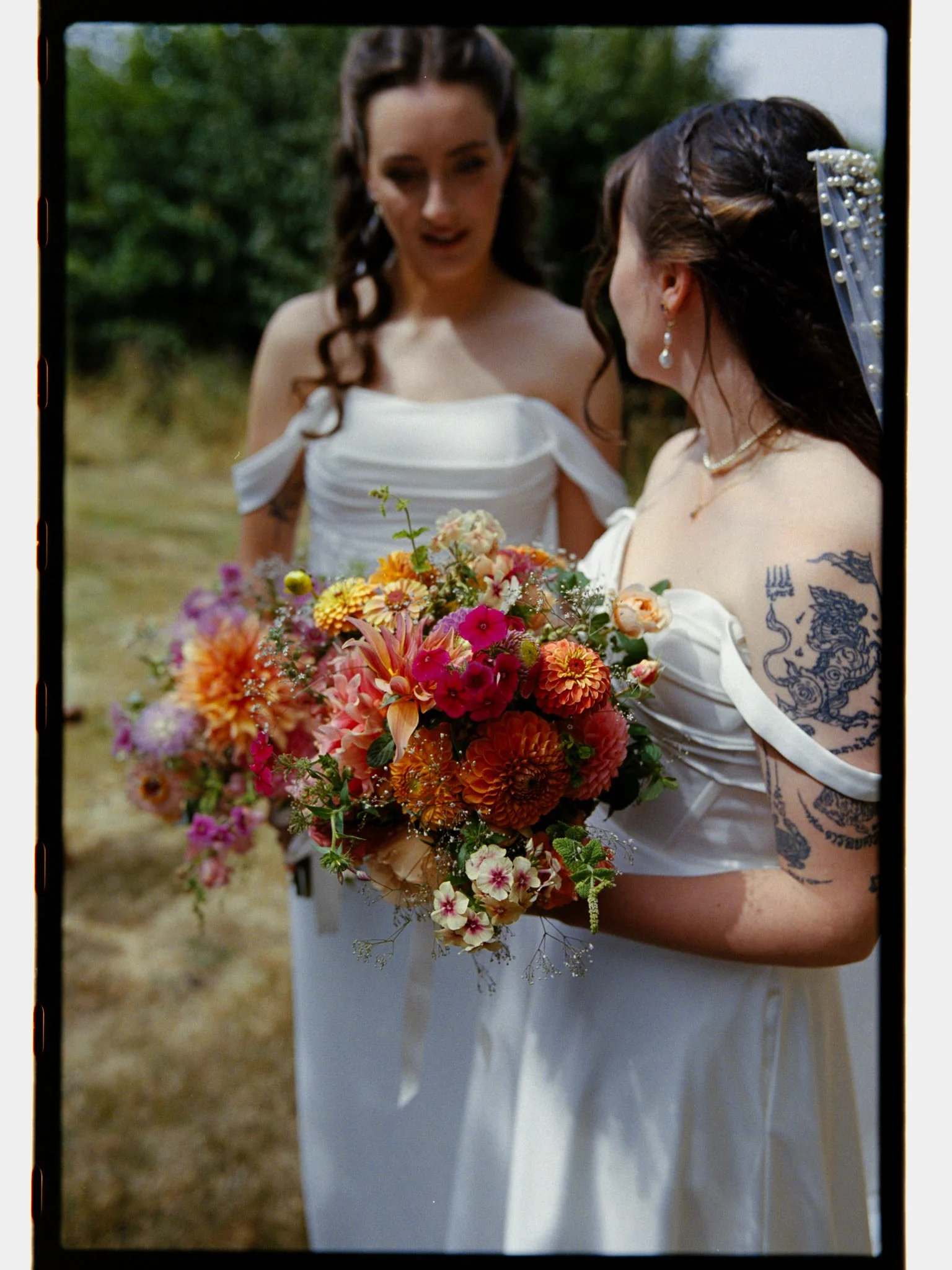
Then there is how 35mm film looks. The way Portra renders greens. The grain of Tri-X. Nothing digital matches it, and once you've seen the difference you can't unsee it.
People say film slows them down, and it does. But my real reason is simpler. I learned on film in 1996, when it was the only game in town, and I never really got over it.
For your wedding, that means real photographs on real film, at the heart of your gallery.
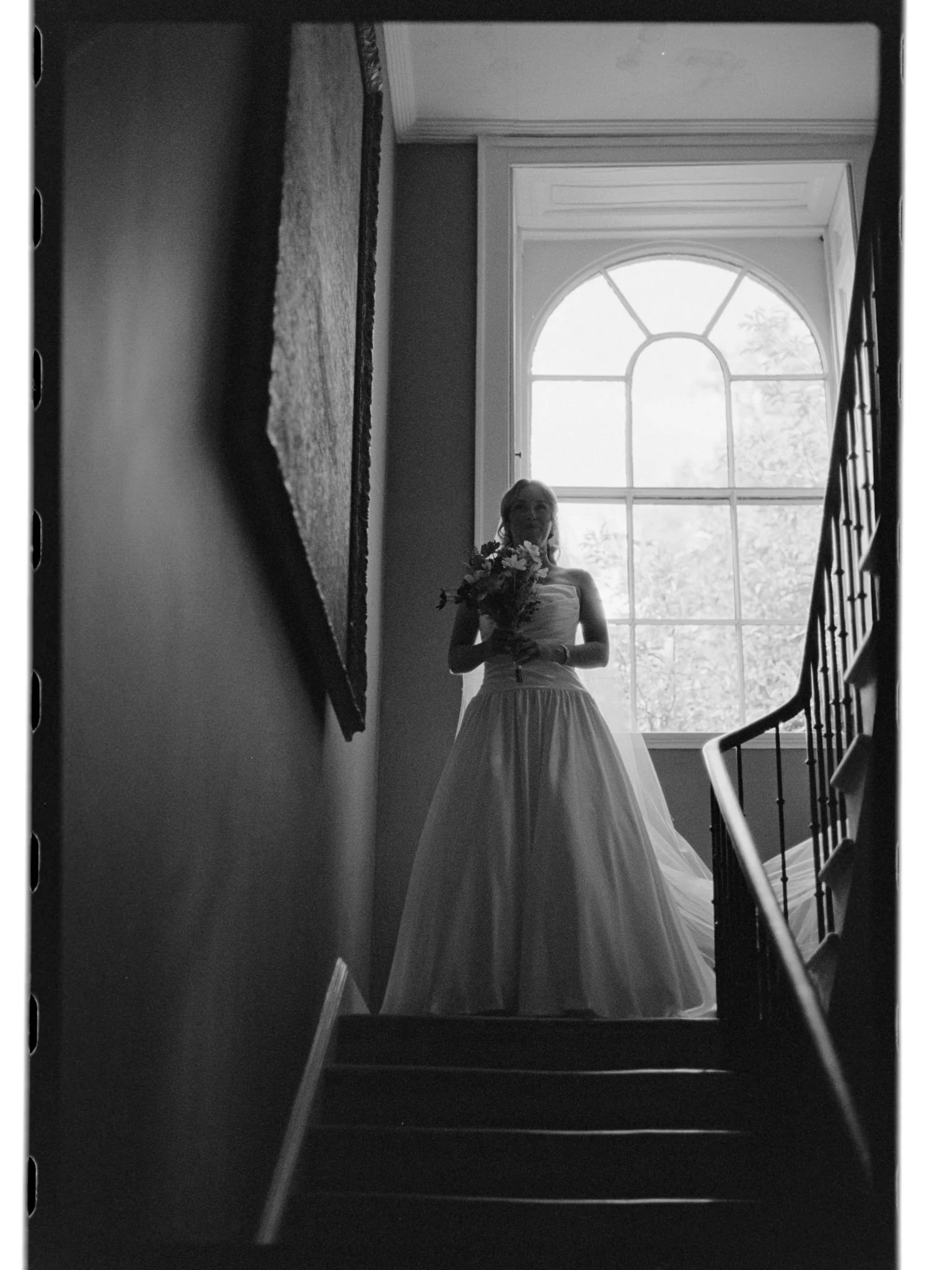
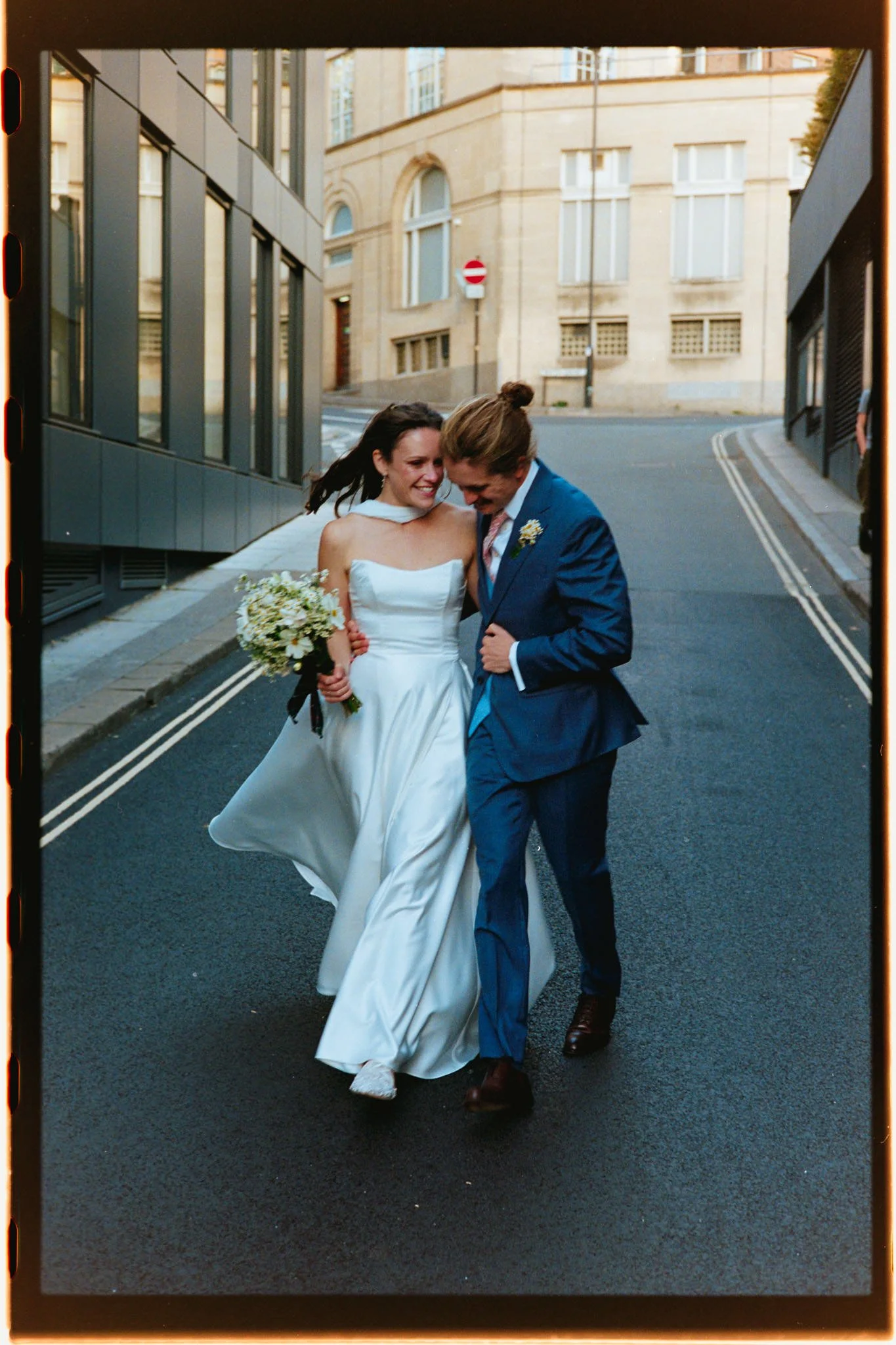
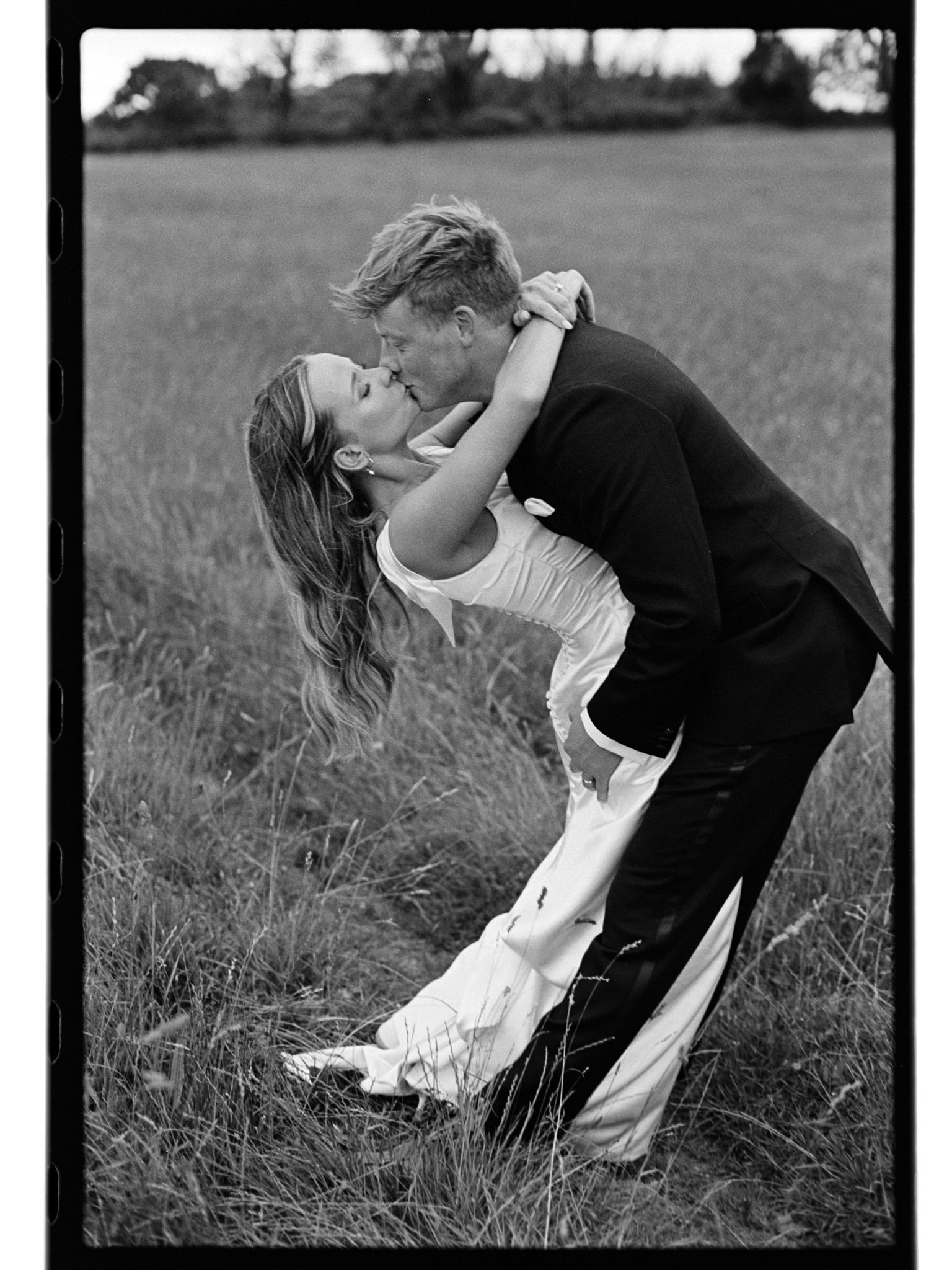
How I Shoot Film at a Wedding
I carry two or three analogue cameras throughout a wedding day. One is always my Leica M6, a fully manual rangefinder. Alongside it, usually a Canon EOS 3, with a different focal length. Two cameras means I’m never caught reloading at an important moment, and there is always a backup.
My film is almost all 35mm, not medium format, because it lets me be fast and responsive and work in an observational, documentary way. There’s a reason so many of the great documentary photographers used 35mm, and very often a Leica M: it’s small, quiet and never gets in the way.
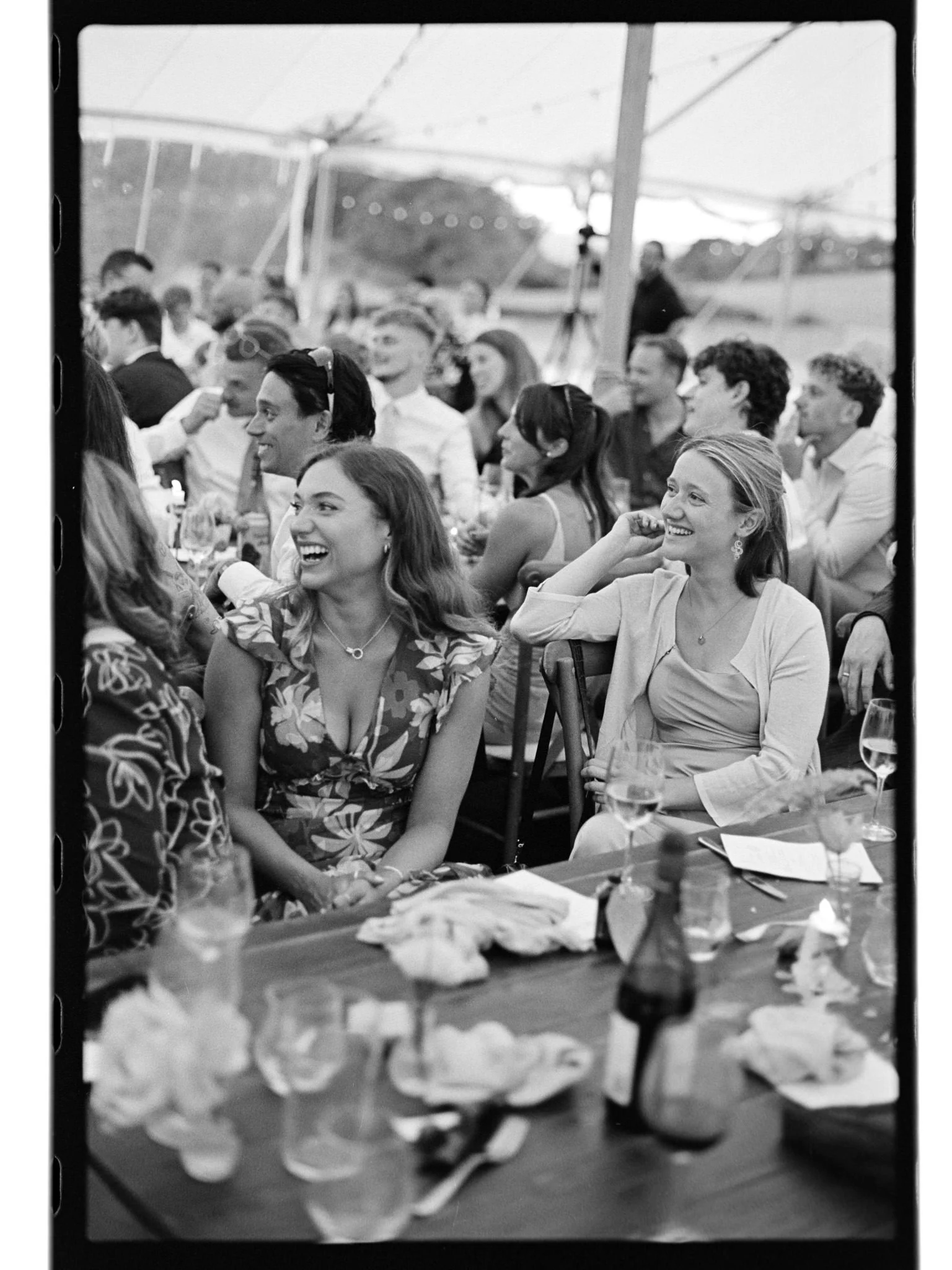
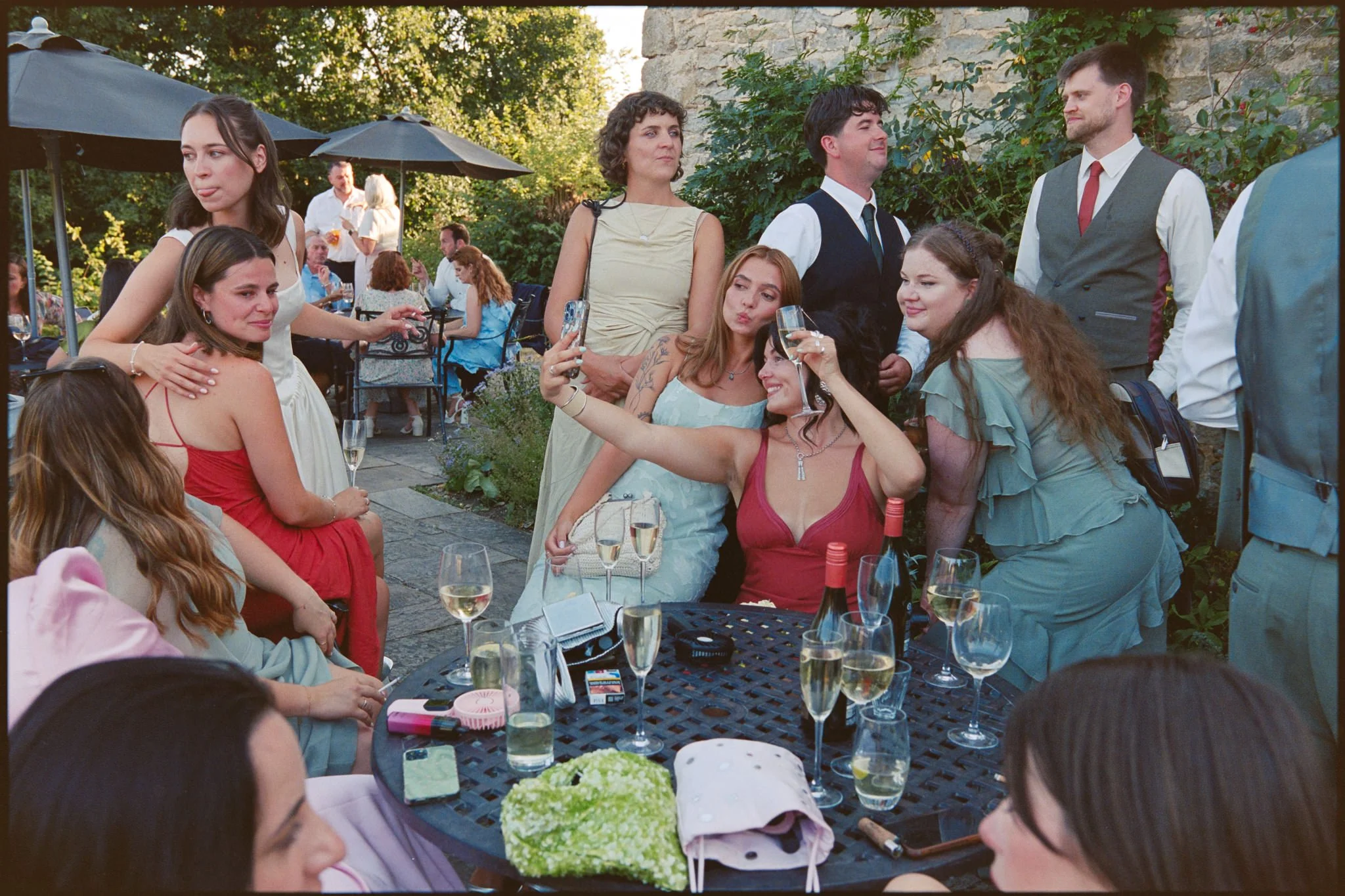
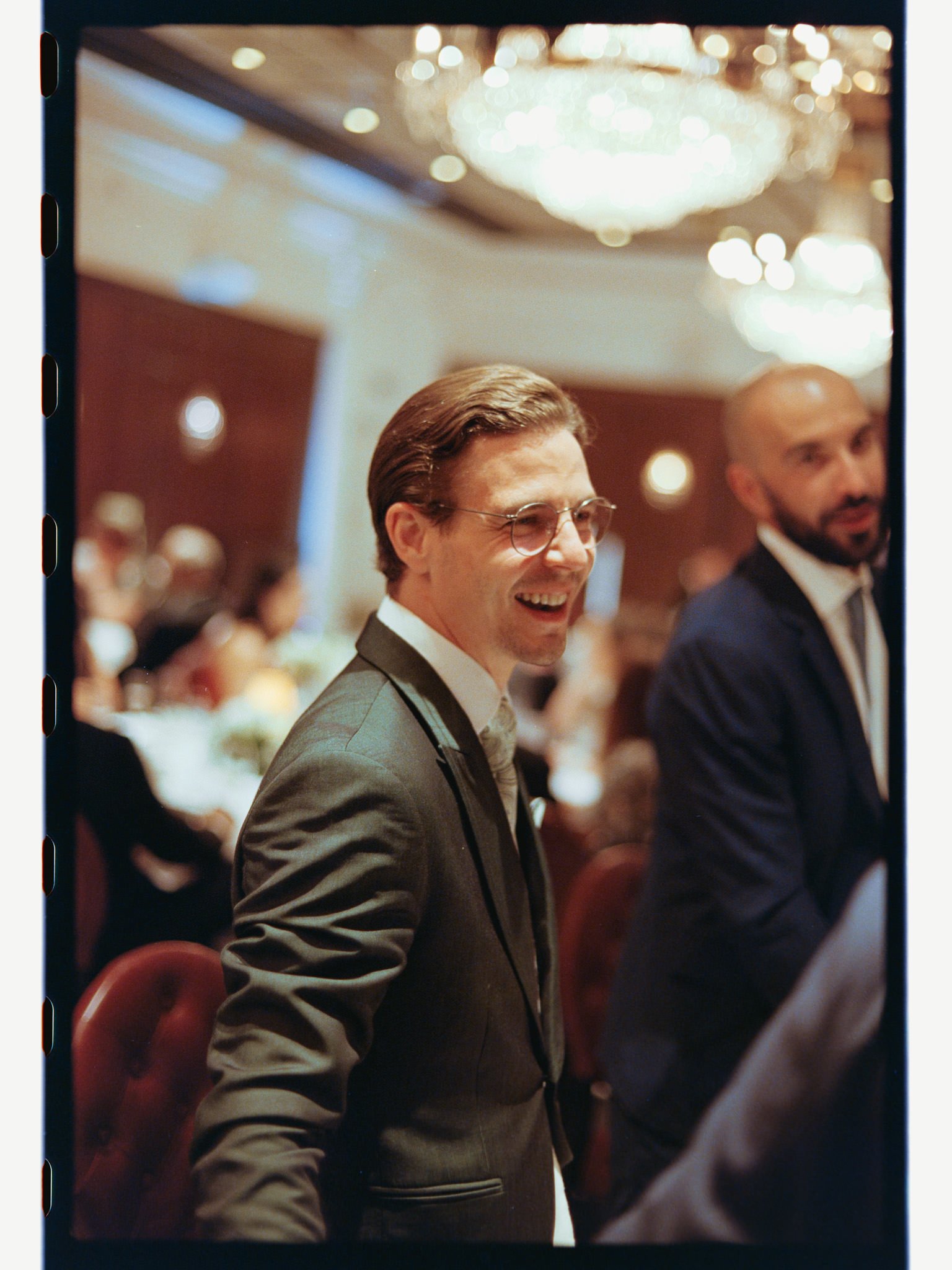
At your wedding you’ll mostly find me among the guests, photographing how people react to each other. With the formal moments, the best pictures usually come just after. I photograph the speeches, but I take more frames once a speech ends, because that’s when people turn to each other.
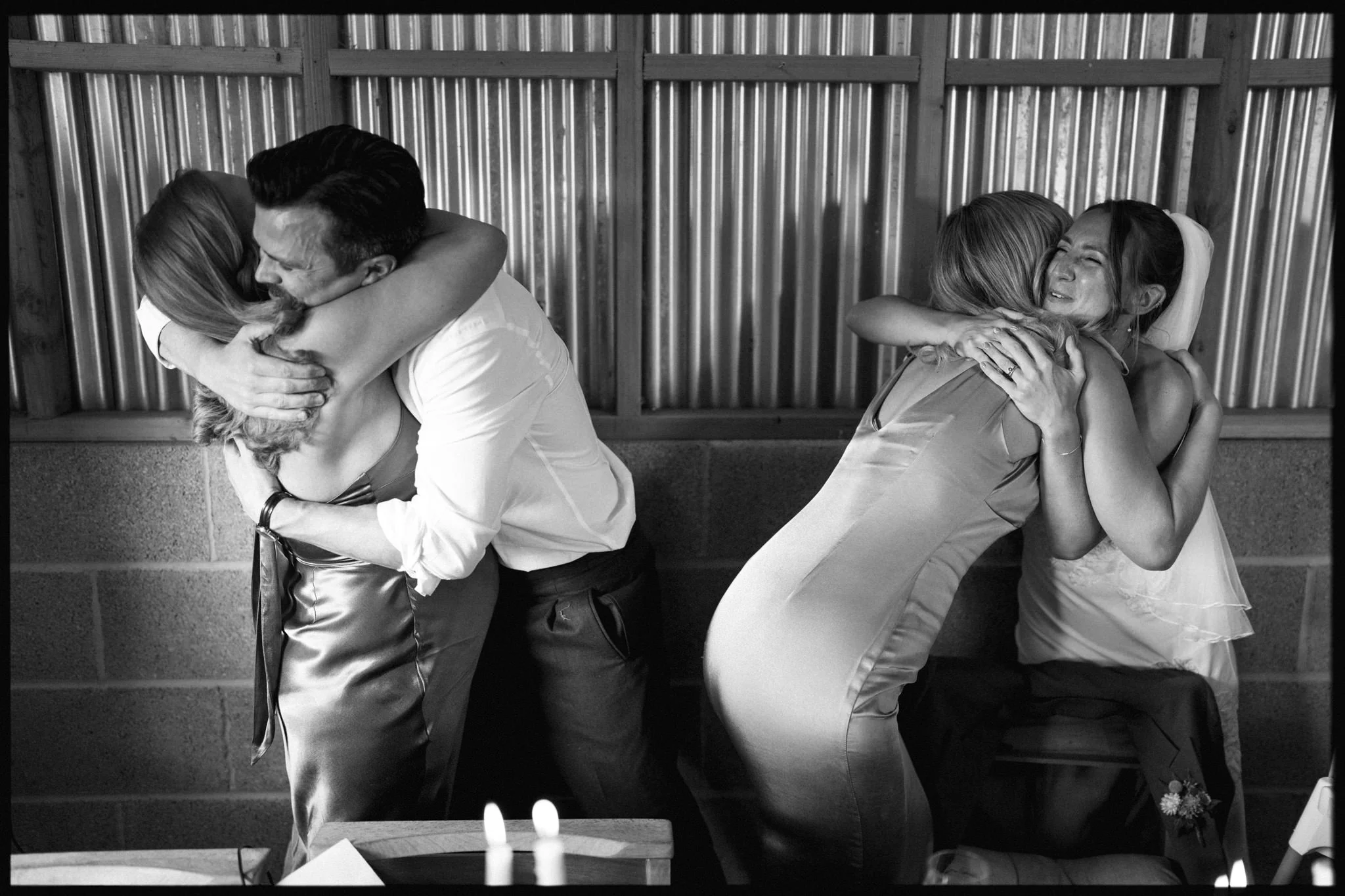
Film is the heart of the gallery. Digital is there for the dark, the fast and the just-in-case.
| Film camera | Leica M6 with 35mm & 50mm Summicron lenses, plus Canon EOS 3 and many other wonderful old cameras |
|---|---|
| Film shot per wedding | Usually between 5 and 10 rolls of 35mm at every wedding |
| Film stocks | Kodak Portra 400 & 800 for colour, Kodak Tri-X 400 for black and white |
| Digital | Mainly for family group photos, very dark venues and as a backup |
| When film comes out | All day, I usually shoot family group photos on digital but film is ever present |
| In your gallery | Film and digital delivered together, blended into a beautiful bespoke gallery. Plus you get all the 35mm film shots as 6x4" prints, delivered to your home |
| Extras | Polaroids available as an optional extra |
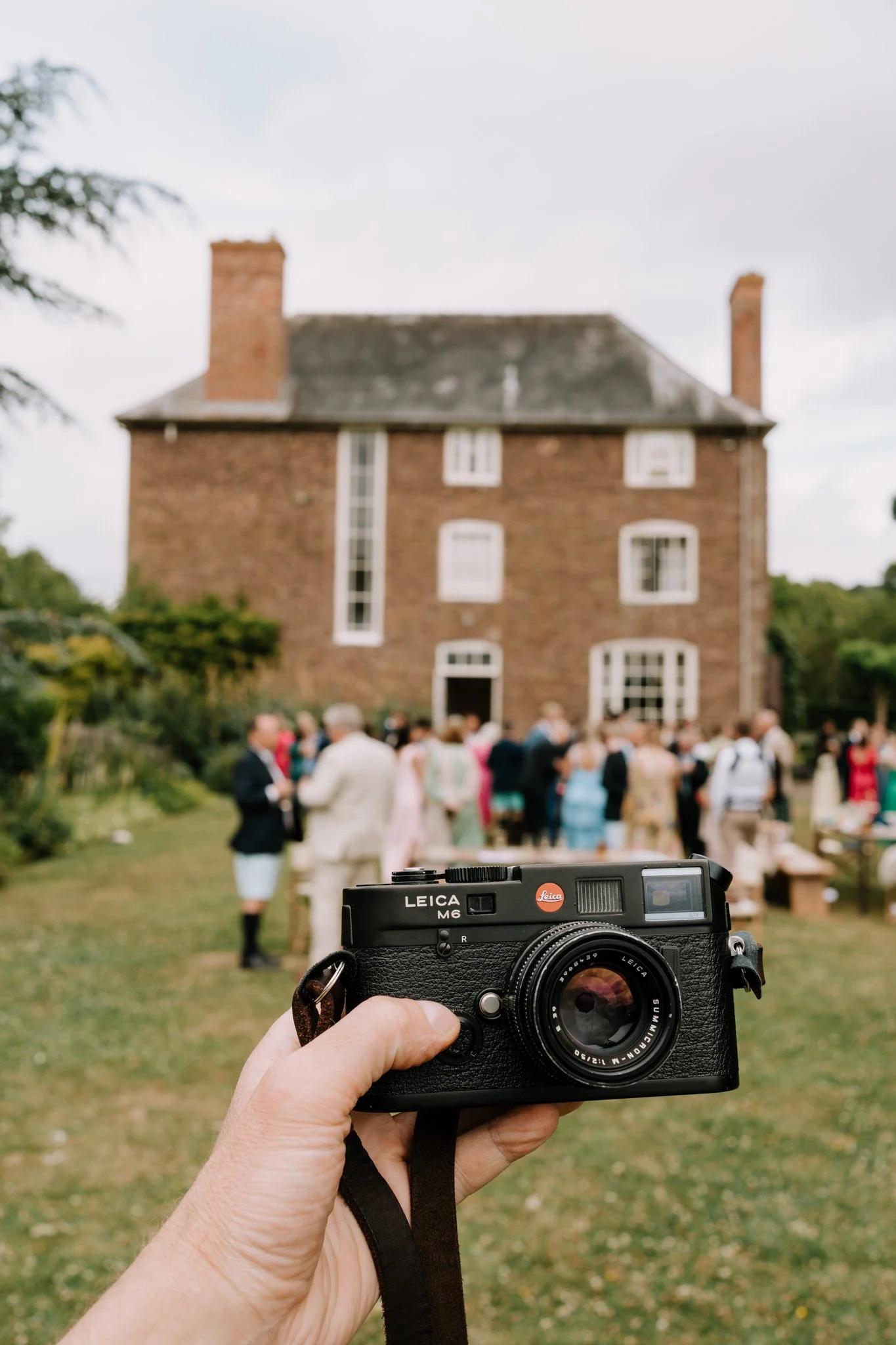
The Leica M6, and why
My main film camera is a Leica M6, with 35mm and 50mm Summicron lenses. It has no autofocus, no screen and no opinions. I set the focus and exposure by hand. That isn’t a limitation, it’s the point. It keeps me aware of the light, and of exactly what I’m asking the camera to do.
What I love is the viewfinder. A rangefinder shows you a little more than the frame, so I can see what’s about to walk into the picture before it does. For observational work, that half-second is everything.
It is also a purely mechanical thing, built to be repaired, not replaced. Mine went away for a service this year and came back six months later. I’ve forgiven it.
What Happens to the Film?
All my film is developed by Photographique in Bristol. Their lab is a short walk from my front door, so your film never goes in the post, and it’s dropped off for processing on the Monday morning after your wedding. With every roll, I also order 6“×4” prints, which I send to you once your gallery is ready.
I scan the negatives myself at home, using a Sony A7 IV with a macro lens on a beautiful old Leitz copy stand that sits by my desk. This is the time-consuming part. I’m fussy, and I want every frame to be right, and consistent with the rest, before you see it.
Once the film is developed and scanned, it’s woven in with the digital images, so your gallery runs in the order the day happened.
In Their Words
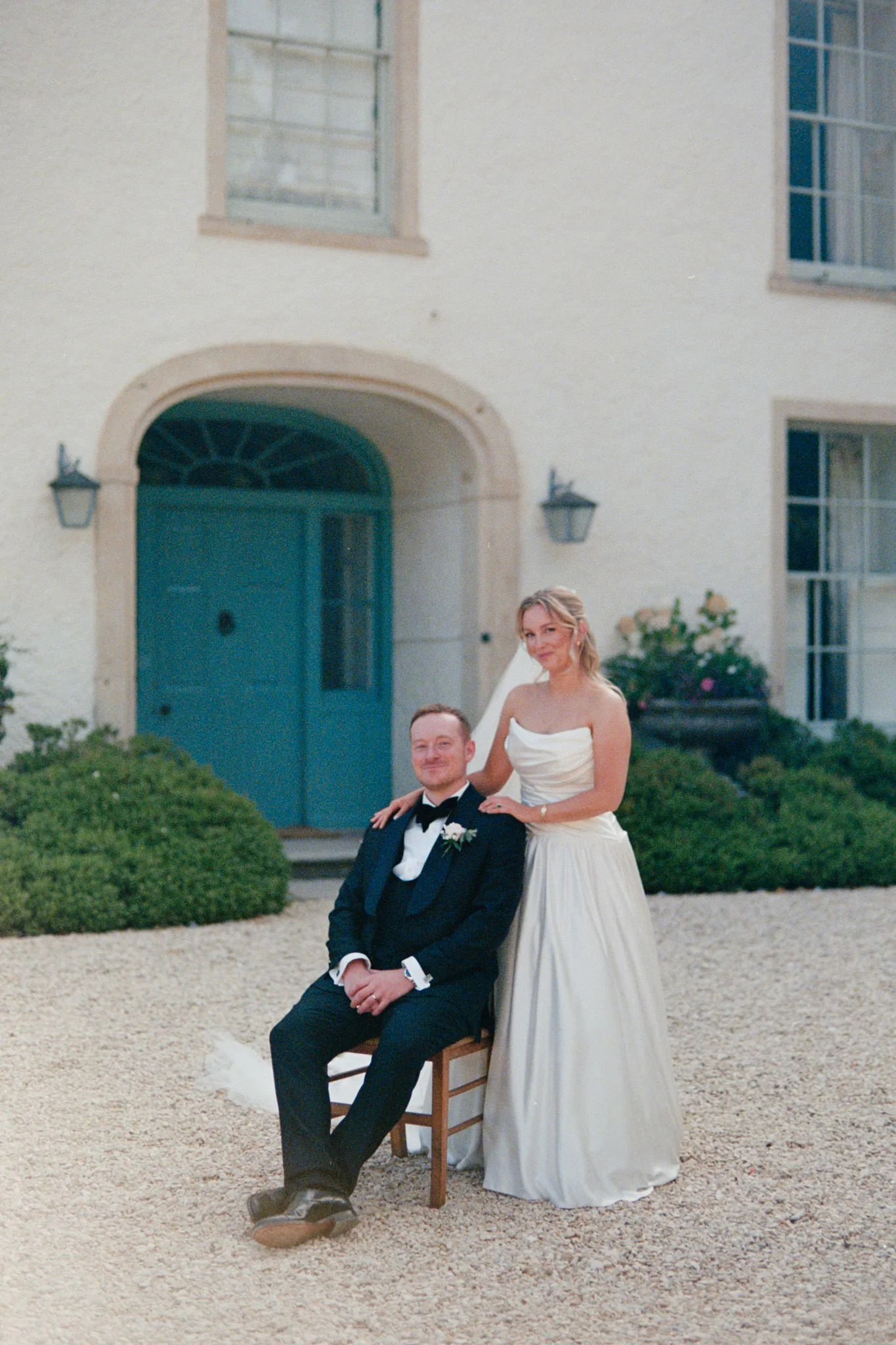
“We ended up with loads of great film shots, which added something really special, and it was such a nice touch to receive them once they had been developed.”
“Being able to have film and Polaroid pictures as well as the digital ones is also a great touch.”
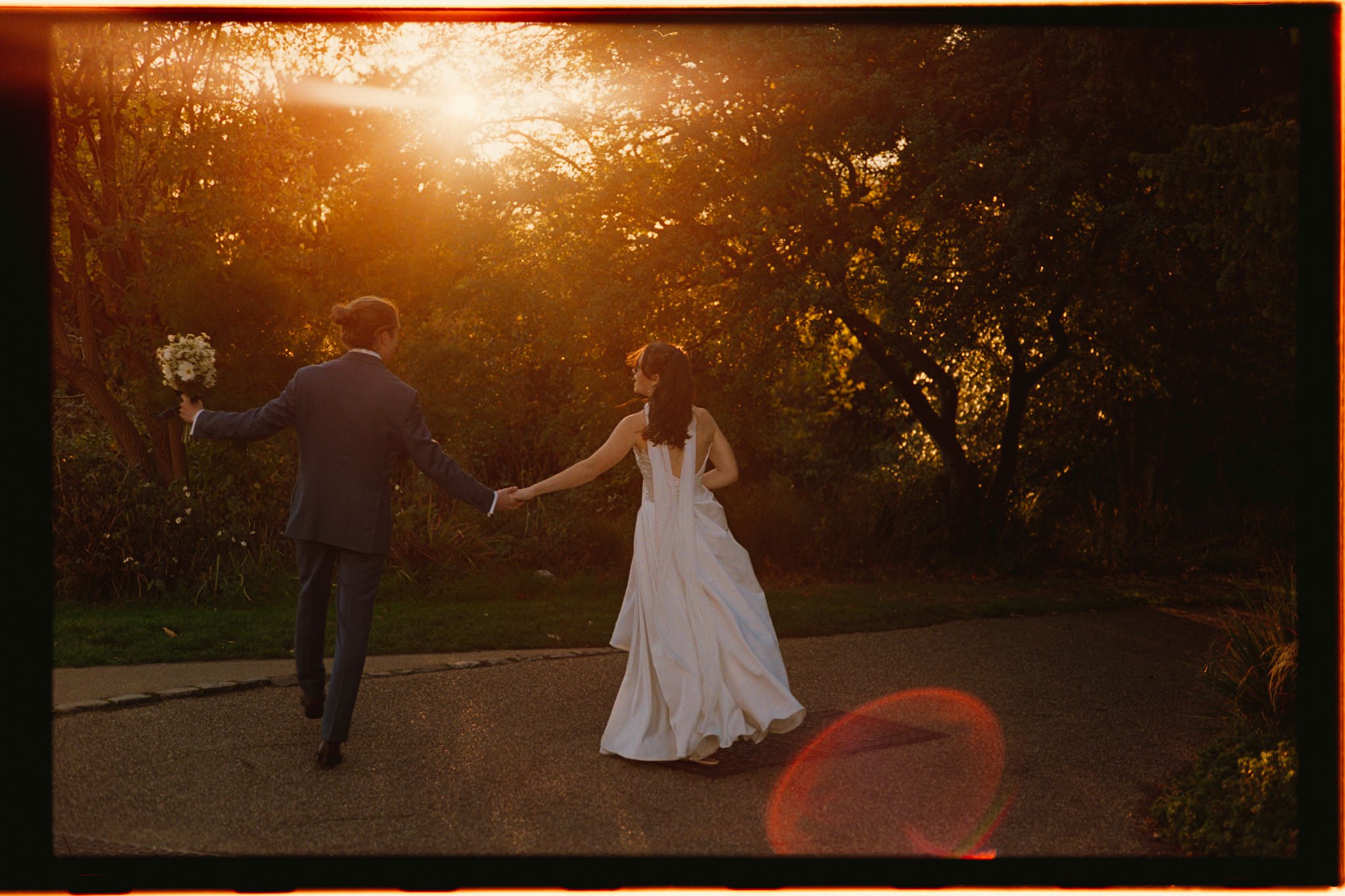
Film Wedding Photography across the UK, Italy and Spain
I live in Bristol (Southville to be exact, if you happen to be nearby) and photograph weddings on analogue film across the South West, London and the Cotswolds. From city weddings at Goldney Hall, The Mount Without or Beeses in Bristol to Brunswick House in London, the Randolph Hotel in Oxford or the lovely Matara in the Cotswolds, travel in the UK is included.
I also take a small number of destination weddings each year, and I’m keen to shoot more film in Spain and Italy, particularly Madrid, Barcelona, Tuscany and Lake Como. The film travels in my hand luggage and comes home to Bristol to be developed.
Film Wedding Photography: Questions
-
No. Film is part of every booking, not an add-on.
-
It varies with the day, but film makes up a substantial part of every gallery.
-
Less than you would think. Digital runs alongside all day, I carry backup cameras, and the film goes by hand to a local lab and is never posted.
-
Yes, absolutely. You would simply need to cover the purchase price and processing for the additional rolls of film and we can discuss it.
-
I love both and generally shoot both at every wedding. However if you have a strong preference we can definitely decide on one format. I try to plan the film stock around the lighting and what is happening at the time.
-
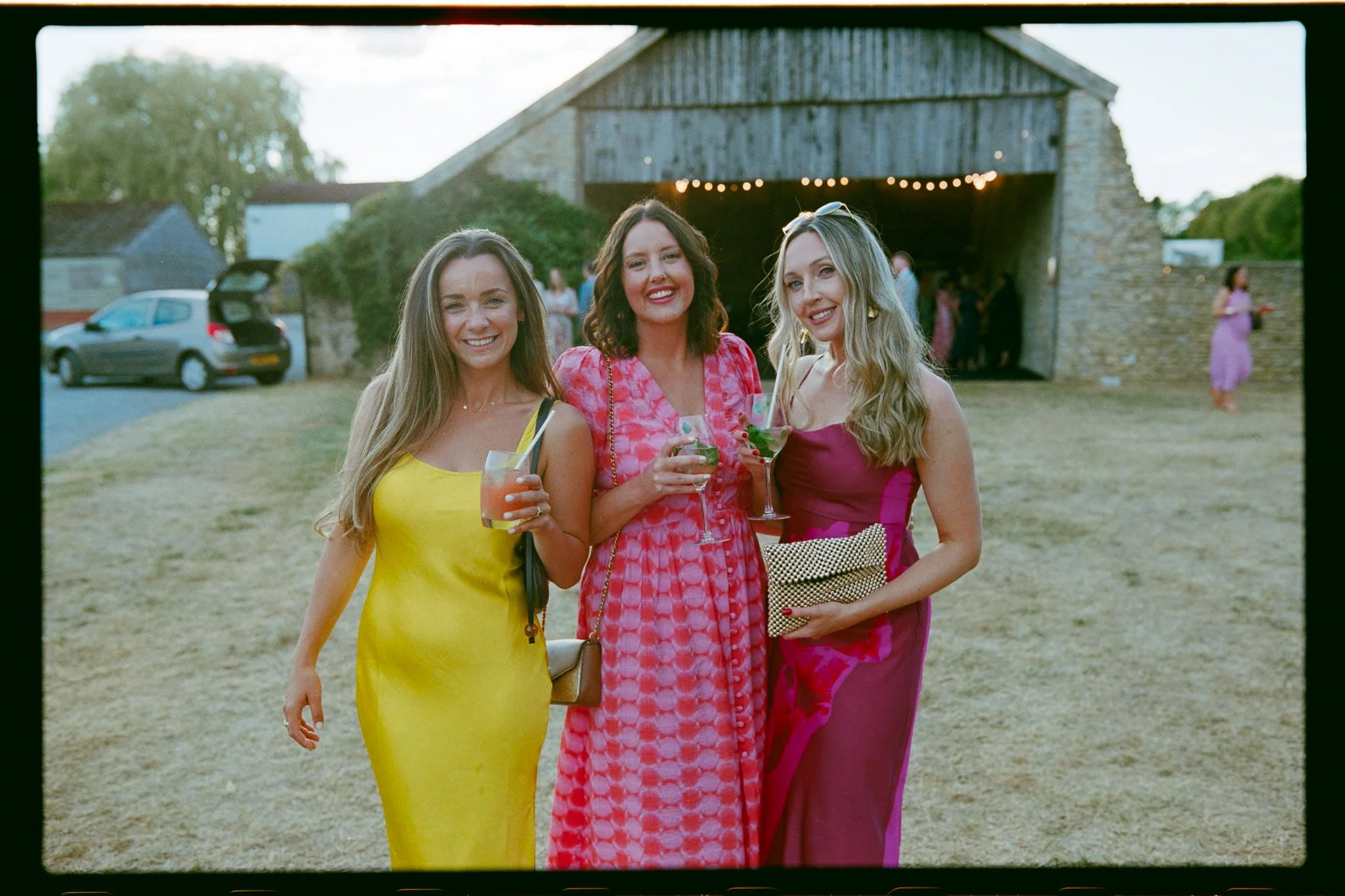
For ceremonies in some particularly dark venues (such as churches), I sometimes lean toward digital as the low light performance is better. However at the party, I love shooting film with flash and it has an awesome look.
-
With the full gallery, in around eight weeks.
-
Yes. It goes in hand luggage and is developed back in Bristol, unless I am in Spain and can drop it at Carmencita lab.